SpaceX and xAI Complete Trillion-Dollar Merger to Launch Orbital AI Infrastructure
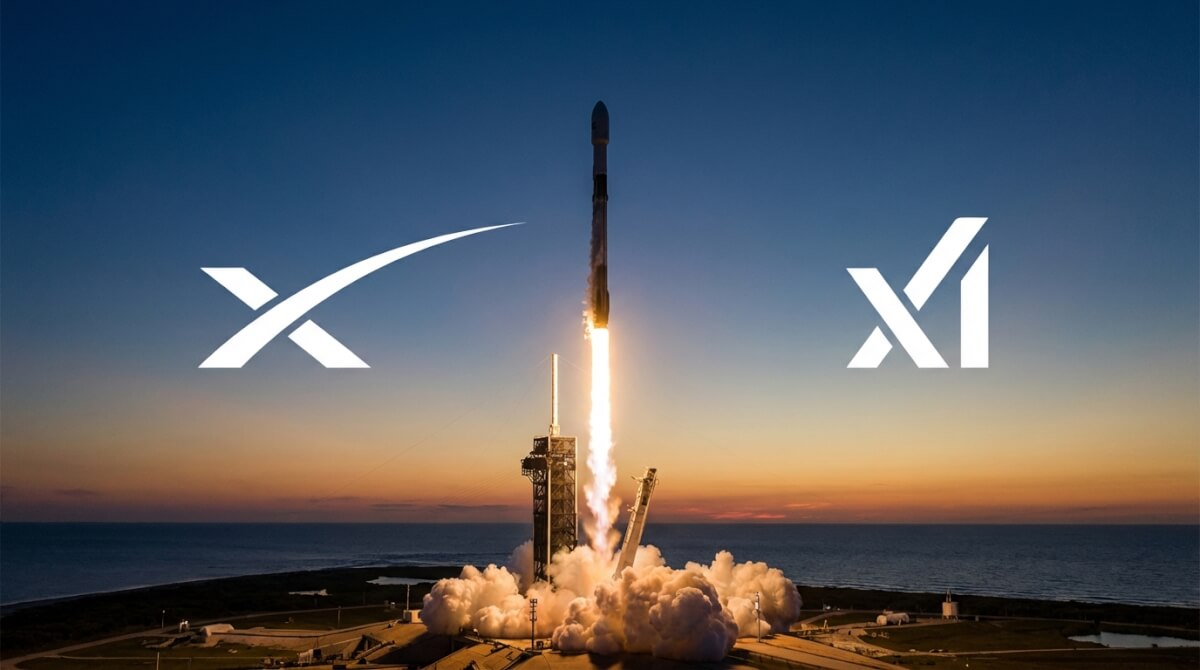
In a move that fundamentally reshapes the global technology and aerospace landscapes, SpaceX has completed its acquisition of xAI, the artificial intelligence startup founded by Elon Musk. The all-stock transaction values the combined entity at approximately $1.25 trillion, cementing its position as the world’s most valuable private company. By integrating xAI’s advanced large language models (LLMs) and the real-time data of the X platform with SpaceX’s heavy-lift launch capabilities, the merger aims to create what Musk describes as a "vertically integrated innovation engine" designed for both terrestrial and orbital operations.
The Logic of Orbital Compute
The core strategic rationale behind the merger is the development of space-based AI data centers. As terrestrial AI clusters, such as xAI’s gigawatt-scale Colossus supercomputer in Memphis, face increasing scrutiny over water consumption and power grid strain, the newly formed entity plans to relocate massive computational workloads to Low Earth Orbit (LEO). By utilizing Starship to deploy high-density server satellites, the company intends to harness near-constant solar energy, avoiding the atmospheric and geographical limitations that hinder Earth-bound facilities.
Technical analysts suggest that this approach addresses the two primary bottlenecks of modern AI: energy and cooling. In vacuum conditions, thermal management remains a challenge, yet the abundance of solar radiation provides a theoretically infinite power source. Musk has projected that within three years, space-based compute will become the most cost-effective method for training next-generation models, potentially adding 100 gigawatts of AI capacity annually through a constellation of over one million dedicated satellites.
Consolidating the Musk Ecosystem
This merger follows a series of internal acquisitions within the Musk ecosystem. In 2025, xAI acquired the social media platform X to integrate its real-time information flow into the training of the Grok LLM. By folding these assets into SpaceX, the new structure ensures that xAI—a high-burn, capital-intensive venture—gains access to the robust cash flows generated by Starlink’s satellite internet business. Recent financial reports indicate that Starlink reached 9 million subscribers in early 2026, providing the liquidity necessary to fund the rapid hardware iterations required for orbital data centers.
Key synergies expected from the merger include:
- Integrated Hardware Development: The use of Tesla-designed AI chips (AI6 and AI7) within Starlink V3 satellites to enable edge computing in orbit.
- Autonomous Aerospace Operations: Utilizing xAI’s reasoning models to optimize Starship flight paths and orbital maneuvers in real-time.
- Data Dominance: The combination of Starlink’s global connectivity and X’s social data to refine Grok’s understanding of global events.
Market Implications and the 2026 IPO
Wall Street has reacted to the merger with a mixture of awe and caution. The $1.25 trillion valuation—comprising a $1 trillion valuation for SpaceX and $250 billion for xAI—sets the stage for a planned Initial Public Offering (IPO) in mid-2026. Financial analysts at Morgan Stanley suggest that a public debut could target a valuation as high as $1.5 trillion, potentially making it the largest IPO in history, surpassing Saudi Aramco’s 2019 record. However, the deal also faces regulatory scrutiny, particularly regarding the potential for monopolistic control over both space transit and the flow of digital information.
Technological and Ethical Hurdles
Despite the optimism, significant engineering obstacles remain. Radiation-hardening of commercial-grade GPUs for long-term orbital use is a complex task, and the sheer volume of planned satellite launches has raised concerns among astronomers and environmentalists regarding space debris and light pollution. Furthermore, the integration of xAI’s Grok into a company with heavy defense and government contracts, such as SpaceX’s Starshield division, raises ethical questions about the role of private AI in national security and global surveillance.
As the merged entity moves toward its June IPO, the focus will remain on whether the company can successfully transition from a theoretical vision of orbital intelligence to a functional, revenue-generating reality. If successful, the SpaceX-xAI merger may not only redefine the future of computing but also accelerate the expansion of human-led infrastructure into the solar system.